Bathroom
How to clean shower grout naturally (without wrecking it)
Dark shower grout is usually soap scum, body oil, and mildew sitting in a porous surface—not a permanent new color. A paste and a soft brush will lift a lot of it. Vinegar is the popular “natural” move, and it is the wrong one for grout you want to keep.
Some product links below go to Amazon and may become affiliate links. If you buy through an affiliate link we may earn a commission at no extra cost to you. See our affiliate disclosure.
Why vinegar is a bad grout cleaner
Grout is cement-based and slightly alkaline. Acid etches it over time, especially if it is unsealed, and a rougher surface stains faster the next month. Keep vinegar and other acids off marble, travertine, limestone, and other natural stone tile or thresholds entirely.
Mixing baking soda with vinegar for the fizz mostly cancels both products. If you want a scrub, use baking soda. If you want acid, use it on mineral film on glass, not on the grout lines. That distinction is spelled out in natural cleaners that actually work.
The baking soda and peroxide method
- Rinse the shower so the grout is wet and loose hair is gone.
- Mix baking soda with enough 3% hydrogen peroxide to make a spreadable paste, about the thickness of toothpaste. A drop of dish soap is optional.
- Spread the paste onto the grout lines. Let it sit 10–15 minutes, but do not let it dry out completely. If it starts to crust, mist it lightly with water.
- Scrub with a stiff nylon grout brush or an old toothbrush, along each line. Do not use a wire brush; it digs out grout.
- Rinse thoroughly, squeegee, and leave the fan on so the stall dries.
Stubborn lines often need a second pass, not a harsher tool. Test peroxide on a hidden stretch of colored grout first; it can lighten some pigments if you leave it on a long time.
For mildew that the paste does not lift
An oxygen bleach powder dissolved in hot water (follow the box) is a reasonable next step on tile and grout. Pour or sponge it on, give it the contact time on the label, scrub, and rinse. It is gentler in a small bathroom than a chlorine-bleach fog, and it is a better match for organic stains than vinegar.
Do not mix products in the stall Rinse thoroughly before you switch cleaners. Never combine peroxide, vinegar, or oxygen bleach with chlorine bleach. Mix the baking-soda paste fresh; do not store leftover peroxide and vinegar in the same bottle.
Caulk is not grout
The flexible bead along the tub, shower pan, or corners is usually caulk, not grout. Mildew that has grown into a silicone bead often cannot be scrubbed out. If the caulk is stained through, shrinking, or pulling away, cutting it out and recaulking is the real fix. Cleaning a failing bead just postpones the leak.
Seal the grout after it is clean
Let the grout dry completely—often 24–48 hours, longer in a poorly ventilated bath—then apply a penetrating grout sealer. Sealing dirty grout locks the stain in, so this step comes last. Reseal on the schedule the bottle suggests; in a shower that is often about once a year.
When “natural” is no longer the job
- If the grout is crumbling, missing, or stained all the way through, more paste will not rebuild it. Regrouting (or a grout colorant made for showers, after a real cleaning) is the honest next step.
- Chlorine bleach can lighten some stains, but the fumes in a stall are harsh, it can yellow some caulks, and it often fails to reach deep into pores. It is not a first choice here.
- Steam can loosen soil, and it can also drive moisture into cracked grout and degrade some sealants. If you use a steamer, keep it moving and let the wall dry fully.
Once the lines are clean, keep them that way with a squeegee, the fan, and a weekly brush—those steps live on the bathroom cleaning checklist. Mineral spots on the glass are a different problem; use the hard-water method on the door, not on the grout.
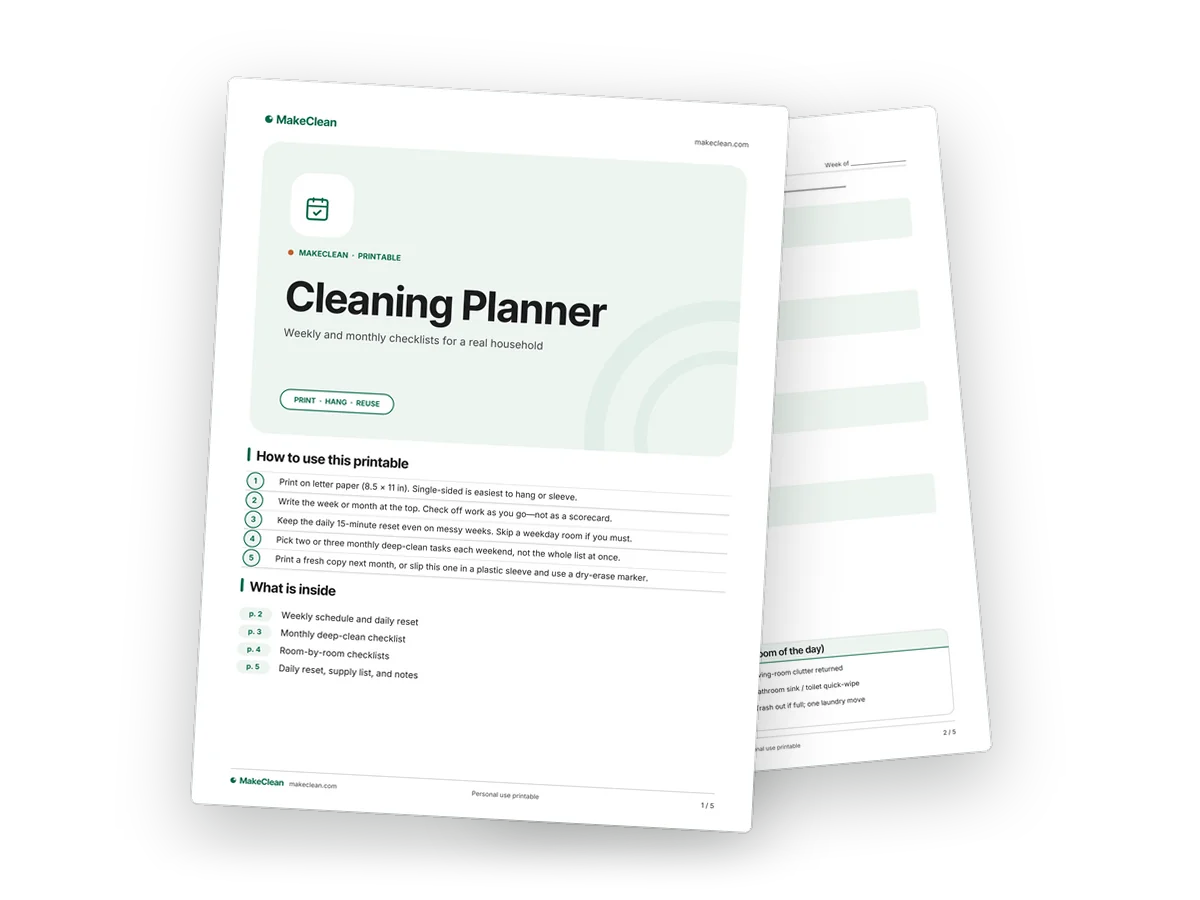
Put the schedule on the fridge
The MakeClean Cleaning Planner is a printable weekly and monthly checklist—same system as this site, ready to write on. Digital download, $7.
instant download
Launch offer: use code LAUNCH30 at checkout for 30% off the planner, until November 30, 2026.
Buy now — $7 See all printables
Secure checkout by Payhip (card or PayPal)
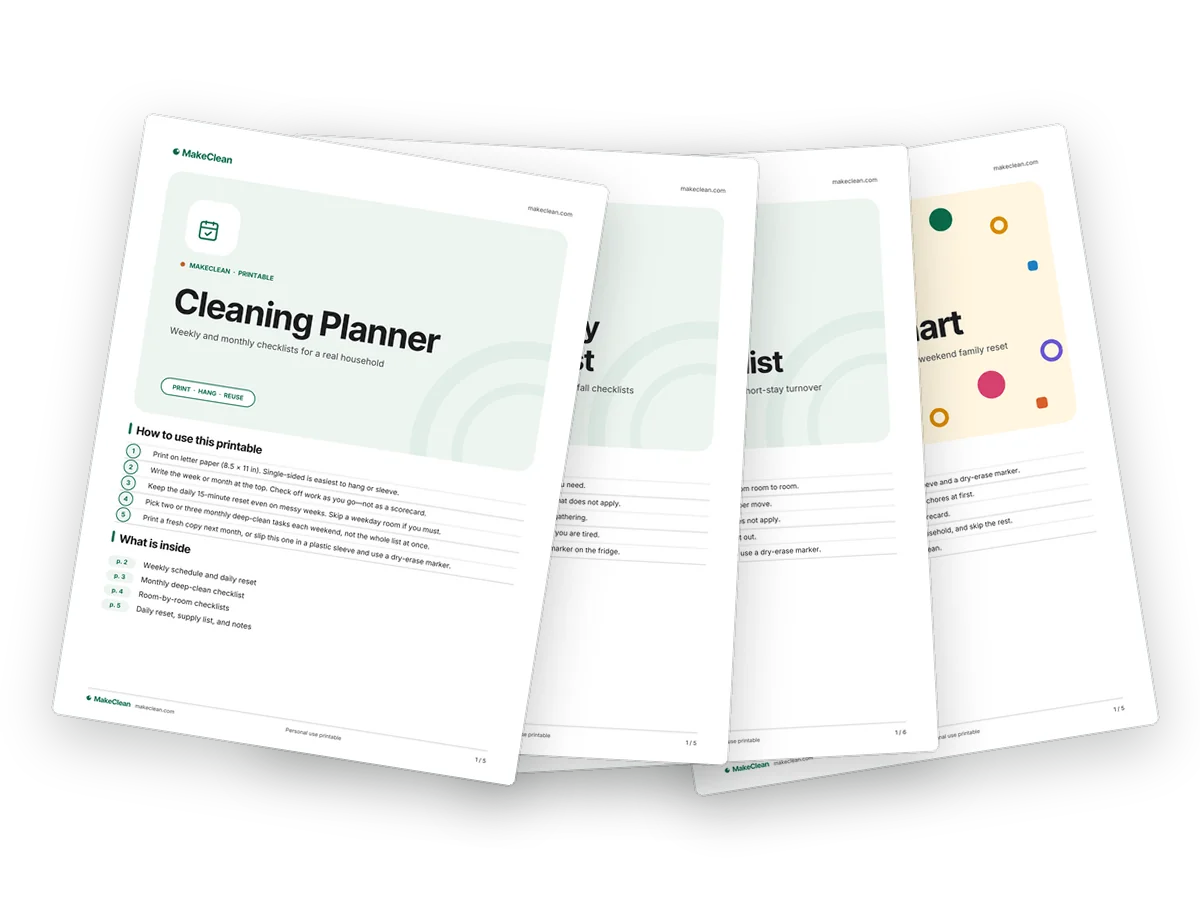
Get the checklists on paper
The Home Printables Bundle includes the planner, move-out checklist, kids' chore chart, and seasonal checklist — $16, save $8 versus buying them separately.
instant download
Launch offer: use code LAUNCH30 at checkout for 30% off the bundle, until November 30, 2026.
Buy now — $16 See all printables
Secure checkout by Payhip (card or PayPal)
Free: a 15-minute daily reset you can keep on messy weeks
Get the free two-page checklist (US Letter). The daily list plus a simple weekly glance — and a path to the full $7 planner if you want the rest of the system.