Stain rescue
How to remove pet urine smell from carpet (enzymes, not perfume)
Pet urine smell in carpet is not a job for air freshener, and it is usually not a job for vinegar alone. Urine leaves uric acid crystals in the fibers and, often, in the pad. Those crystals let go of odor again whenever the spot gets damp. An enzyme cleaner is what actually breaks that residue down.
Some product links below go to Amazon and may become affiliate links. If you buy through an affiliate link we may earn a commission at no extra cost to you. See our affiliate disclosure.
Act while it is still wet
- Blot, do not rub. Use a thick stack of white towels or paper towels and press with your full weight, or stand on the towels. Keep swapping to a dry section until you are lifting almost no liquid.
- If you can, put a dry towel under the carpet edge or, on a loose rug, flip and blot the back as well. A lot of the urine is below the surface you can see.
- Do not add a flood of water “to dilute it” if you cannot extract that water again. A wet pad is how a small accident becomes a lasting smell.
A wet/dry vacuum or a small extractor, used only to pull liquid out, is helpful if you have one. This is extraction, not steam-cleaning. Heat comes later, if at all, and only after enzymes have had their chance.
Skip ammonia, steam, and “odor-masking” sprays first Ammonia smells related to urine to many animals and can invite a repeat in the same spot. Steam or a hot extraction too early can set odor into the pad. Perfume and baking soda alone may make the room smell better for an afternoon and leave the crystals in place.
Use an enzyme cleaner the way the label intends
Buy an enzyme pet-stain cleaner that lists urine on the label. Cheap “pet” sprays that are only fragrance and surfactant will not do this job. Enzymes need contact time and a slightly damp environment; they are not a wipe-and-go polish.
- Test a hidden corner for colorfastness.
- Apply enough product to reach as deep as the urine went—usually more than a light surface mist, especially on a soaked pad. Follow the bottle for how wet to go. The point is to wet the residue, not to create a new flood you cannot dry.
- Let it sit for the full time on the label, often 10–15 minutes and sometimes longer. Do not walk on it, and do not blot it up immediately.
- Blot up any excess. Let the area air-dry completely. A fan helps. Some products tell you not to rinse; others do. Follow that product, not a generic internet mix.
- If a faint smell remains after a full dry, a second enzyme treatment is more reasonable than switching to a harsher chemical.
Finding old spots In a dim room, a UV or “black” light can make many urine stains fluoresce, so you are not guessing. Treat every spot you find, not just the one you can smell today. Old, repeatedly soiled areas may need a professional cleaner or, if the pad is saturated, replacement of that section of pad and carpet.
What vinegar and baking soda can and cannot do
White vinegar can help with some fresh surface odor and with mineral residue, and a light baking-soda sprinkle after the enzyme treatment is dry can absorb leftover smell before you vacuum. Neither one digests uric acid the way a dedicated enzyme formula does. If you already used vinegar, blot and let the carpet dry before you apply enzymes, and do not mix products into one homemade jug. The broader “what natural cleaners actually do” explanation is in natural cleaners that actually work.
Rugs, upholstery, and mattresses
A washable area rug can often go through a pet-safe wash after you have blotted and pre-treated, if the fiber and construction allow it. Wool and viscose need more caution—when in doubt, a rug cleaner. For a microfiber sofa, read the cleaning code and use the microfiber couch method alongside an enzyme product that is safe for that fabric. For a bed, keep moisture low and follow how to clean a mattress at home.
When the pad is the problem
If the carpet is dry, you have used enzymes correctly, and the smell returns on a humid day or after a steam-clean, the pad or even the subfloor may be holding residue. A surface spray cannot reach that reliably. Options then are professional extraction, lifting the carpet to treat or replace the pad, or, for a small, obvious zone, cutting out and replacing that section. That is not a failure of effort; it is the limit of a top-down clean.
Prevent a repeat: clean the spot fully, then use an enzyme or pet-safe deterrent only if it fits your training plan, and give the animal more frequent access to the right place. A lingering smell is one reason accidents recur in the same corner.
Supplies
- White towels and, if you have one, a wet/dry vacuum for extraction
- An enzyme cleaner labeled for pet urine on carpet
- A fan to dry the area
- Optional: UV light to find old spots, baking soda to sprinkle after the treatment is dry
For other stains on the same carpet—wine, grease, mud—start with the common-stain playbook or, for wine specifically, how to remove red wine from carpet. Do not assume those recipes will kill urine odor.
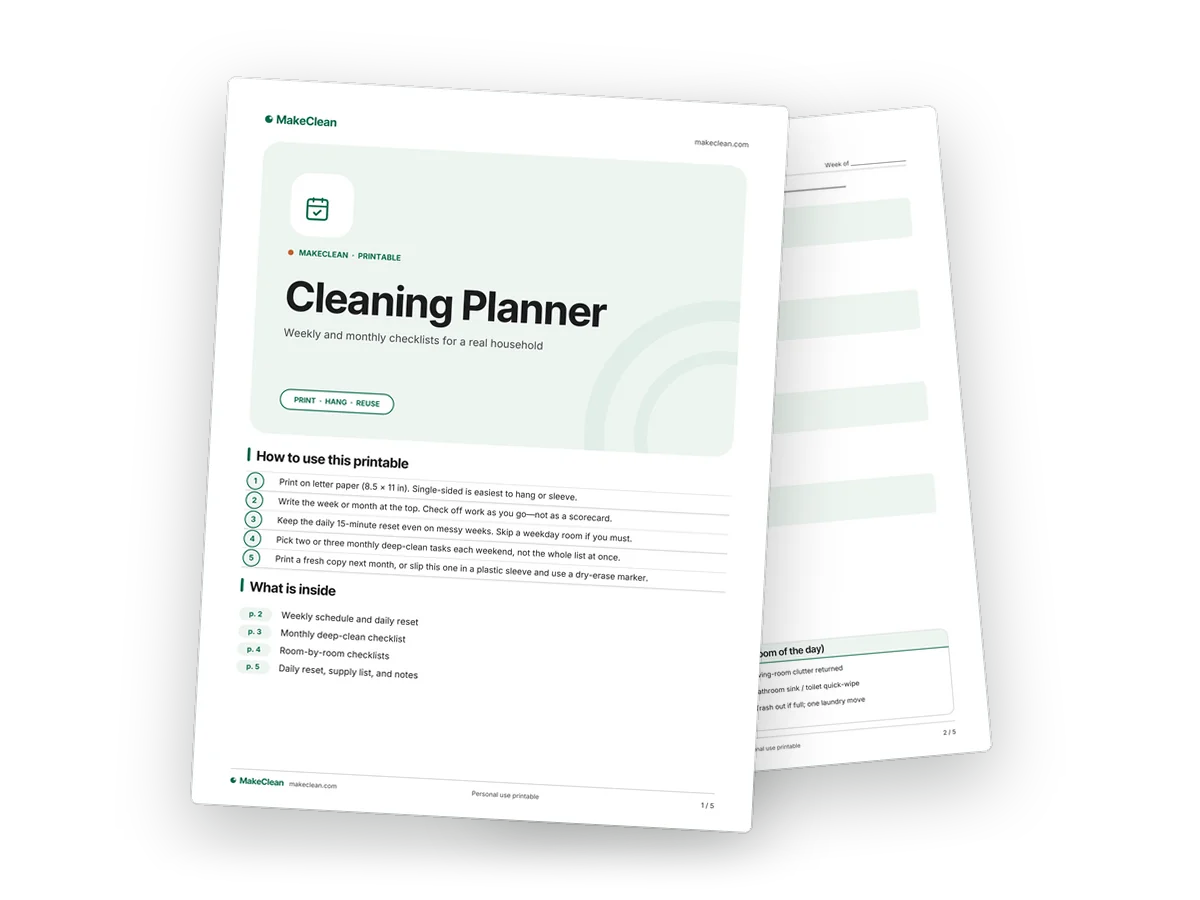
Put the schedule on the fridge
The MakeClean Cleaning Planner is a printable weekly and monthly checklist—same system as this site, ready to write on. Digital download, $7.
instant download
Launch offer: use code LAUNCH30 at checkout for 30% off the planner, until November 30, 2026.
Buy now — $7 See all printables
Secure checkout by Payhip (card or PayPal)
FAQ
Will vinegar remove pet urine smell from carpet?
It may freshen a light, fresh surface odor, but it does not reliably break down uric acid in the pad. Use an enzyme cleaner for the actual urine residue, and treat vinegar as a minor helper at most, never mixed into the same bottle as other cleaners.
Can I use a steam cleaner on pet urine?
Not first. Heat can set the odor if the residue is still there. Extract or blot the liquid, complete an enzyme treatment, let it dry, and only then consider steam or professional extraction if the carpet type allows it and the smell is already improved.
How long does enzyme cleaner need to sit?
Follow the bottle. Many need at least 10–15 minutes, and some work for hours as they dry. Wiping the product up right away is the most common reason people say “enzymes don’t work.”
The smell came back after a few days. What now?
The urine probably went deeper than the first treatment, or there is another spot you missed. Try a second enzyme application with enough product to reach the pad, dry thoroughly, and use a UV light to look for other stains. If it still returns, the pad or subfloor may need a professional or a replacement.
Is baking soda enough for old urine stains?
Baking soda can absorb odor at the surface after the area is clean and dry. It will not remove a set urine stain or the crystals in the backing. Use it as a finishing deodorizer, then vacuum, not as the only treatment.

Get the checklists on paper
The Home Printables Bundle includes the planner, move-out checklist, kids' chore chart, and seasonal checklist — $16, save $8 versus buying them separately.
instant download
Launch offer: use code LAUNCH30 at checkout for 30% off the bundle, until November 30, 2026.
Buy now — $16 See all printables
Secure checkout by Payhip (card or PayPal)
Free: a 15-minute daily reset you can keep on messy weeks
Get the free two-page checklist (US Letter). The daily list plus a simple weekly glance — and a path to the full $7 planner if you want the rest of the system.