Kitchen
How to clean a dishwasher filter (and why the dishes still feel greasy)
If the glasses come out cloudy, the bottom of the dishwasher smells, or food is baked back onto the plates, start with the filter—not a new appliance. A clogged filter recirculates last night’s crumbs through the spray arms and onto the next load.
Some product links below go to Amazon and may become affiliate links. If you buy through an affiliate link we may earn a commission at no extra cost to you. See our affiliate disclosure.
Find the filter
On most dishwashers made in the last 15 years, the filter is a cylinder or a flat screen (sometimes both) in the floor of the tub, under the lower rack and usually near the back or the center. Pull the lower rack out and look for a twist-off ring or a screen you can lift. Your manual will show the exact motion; many filters turn counterclockwise and lift out in two pieces—a coarse screen and a fine mesh cup.
Some older or special units have a self-cleaning “hard food disposer” and no removable filter. If you genuinely cannot find a filter after checking the manual, do not pry at the heating element or the pump cover. Clean the spray arms and run a maintenance cycle instead, and confirm the design before you force anything.
How to clean it
- Stop the machine and wait until any cycle has finished. Remove the lower rack.
- Unscrew or unclip the filter as the manual shows. Keep the pieces in order so you can put them back the same way.
- Empty loose food into the trash, not down the sink if you have a disposal you would rather not jam with a wad of glass-sharp bone or a fruit sticker.
- Rinse the filter under hot running water. Use a soft bottle brush or an old toothbrush on the mesh. A little degreasing dish soap cuts the slick film that water alone will not move.
- If the mesh is filmed with hard-water scale (white or chalky, not just grease), soak the filter in a bowl of warm white vinegar for 10–15 minutes, then brush and rinse. Keep vinegar off natural-stone sink surrounds if you are working at a marble or limestone sink; use a plastic tub.
- Rinse until there are no suds. Seat the filter firmly. A loose filter can rattle, leak debris into the pump, or, on some models, trip an error code.
- Put the rack back and run a short hot cycle empty, or just start using the machine—your next regular wash will tell you if the spray is stronger.
While you are in there, check the spray arms Pop the upper and lower arms off if they come off easily (many lift or unscrew). Hold them up to the light. If the jets are clogged with seeds or scale, clear them with a toothpick or a straightened paper clip, rinse, and snap them back so they spin freely. A blocked arm is the other common reason the top rack never gets clean.
The tub, the door seal, and the smell
Wipe the door gasket and the lip at the front of the tub with a damp cloth. That crease collects a surprising amount of grime and is often the source of a sour smell, not the “inside of the pump.” If the stainless tub has a rainbow or chalky film, a dishwasher-safe citric acid powder cleaner or a product labeled for dishwashers, used as directed, is more reliable than a random vinegar cup on every cycle. Vinegar can help with light mineral film, but some manufacturers warn against running vinegar or lemon juice through rubber parts and certain coatings on a regular basis—check the manual, and do not make an acid rinse a weekly habit if the maker says not to.
For the exterior, especially a stainless door, use the streak-free stainless method instead of the same degreaser you just used on the filter.
Why the dishes still feel greasy
- The filter was dirty, or it was not seated after cleaning.
- Spray-arm holes were blocked.
- You are using too little detergent for hard water, or a detergent that does not rinse well in a short, cool cycle.
- The incoming water is not hot enough. Most machines want water around 120°F at the start; if you have to run the kitchen tap first so the machine doesn’t fill with cold water, that can be the issue.
- Hard-water film, which looks like a haze on glass and feels rough. That is a descaling and detergent problem, not something a second filter rinse will fix on its own.
Skip the “just use more soap” fix Extra detergent in a dirty machine leaves a white or greasy film and can overflow into a sudsy mess. Clean the filter first. Never mix a dishwasher cleaner, bleach, and vinegar in one cycle.
How often
If you rinse dishes thoroughly before loading, a look at the filter every month may be enough. If you load plates as they come off the table, check it every week or two. A quick rinse of the filter takes a few minutes once you know how it twists out. Add it to a kitchen deep-clean day on the weekly cleaning schedule, the same day you might wipe cabinet fronts or the microwave.
Food stuck to the filter is often the same grease that landed on the cabinets near the stove. If those doors are tacky, the cabinet degreasing method will keep that film from traveling.
Supplies
- Dish soap and a soft bottle brush or old toothbrush
- A bowl or tub for a vinegar soak if the mesh is scaled
- A toothpick or paper clip for spray-arm jets
- Optional: citric acid or a cleaner made for dishwashers, used as the label and the manual allow
Put the schedule on the fridge
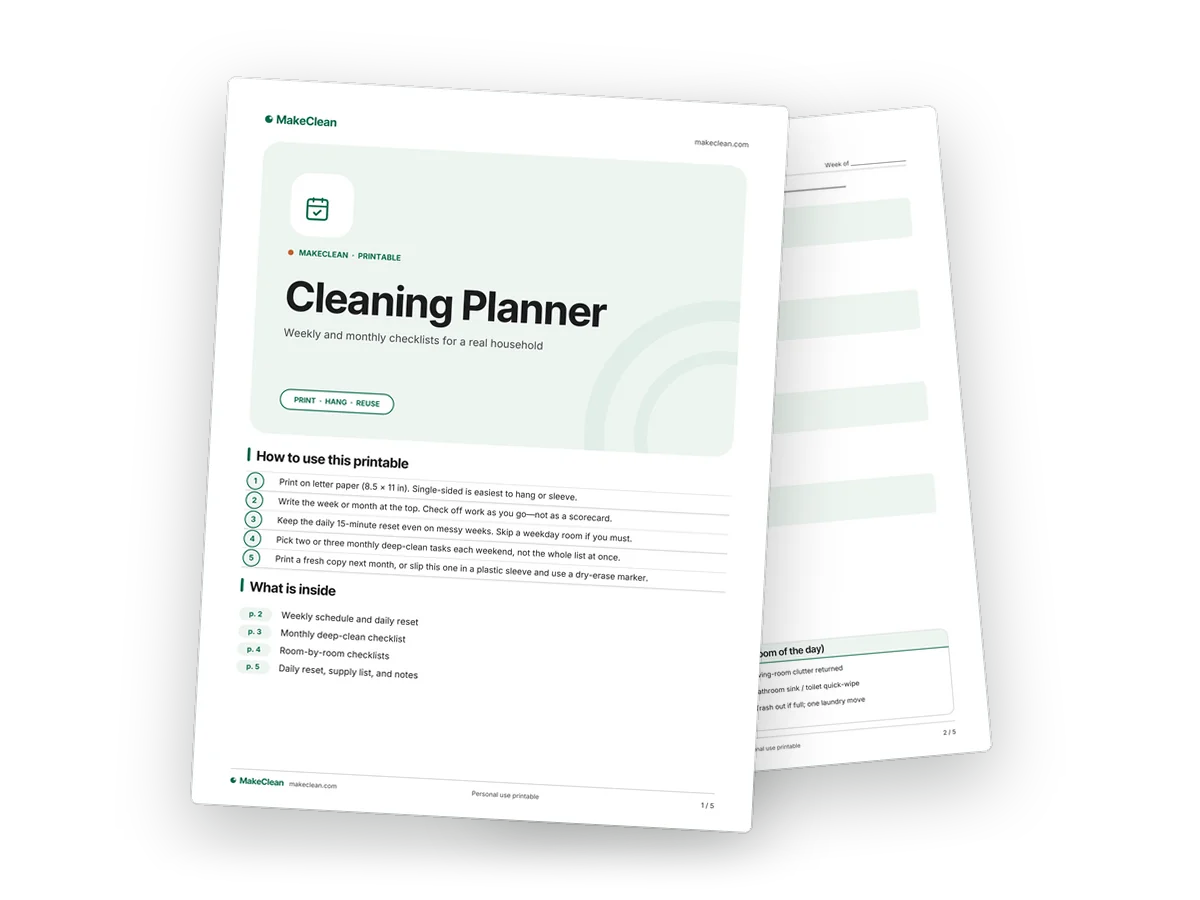
The MakeClean Cleaning Planner is a printable weekly and monthly checklist—same system as this site, ready to write on. Digital download, $7.
instant download
Launch offer: use code LAUNCH30 at checkout for 30% off the planner, until November 30, 2026.
Buy now — $7 See all printables
Secure checkout by Payhip (card or PayPal)
FAQ
How often should I clean my dishwasher filter?
Look at it every week or two if you load leftover food, and at least monthly even if you rinse first. If you can see food or feel a slick film, clean it now. A smelly machine or grit on the bottoms of glasses is a sign you waited too long.
Can I put the dishwasher filter in the dishwasher?
It is already in the dishwasher, and that is how it got dirty. Take it out and wash it by hand so debris actually leaves the machine. A few filters are listed as top-rack safe once they are scraped out; most are not, and a loose filter in a load can damage a rack or the pump.
Is vinegar safe to run through a dishwasher?
A short vinegar soak of a removable filter in a bowl is usually fine. Running vinegar as a regular rinse aid or “cleaning cycle” is more debated—some makers warn that regular acid can degrade seals. Use a product they approve for a full-machine descale, and do not combine vinegar with bleach or a commercial dishwasher cleaner in the same run.
My dishwasher has no removable filter. What should I do?
Follow the manual for a self-cleaning or hard-food-disposer model. Wipe the tub and door seal, clear the spray arms, and run the maker’s cleaning cycle or a hot empty wash with a recommended cleaner. Do not dismantle the pump unless you know the design.
Why do my glasses still come out cloudy after I cleaned the filter?
That is often hard-water etching or mineral film, not leftover crumbs. Film sometimes comes off with a citric-acid or dishwasher-cleaner cycle; etching is permanent damage to the glass. Try a rinse aid, the right detergent dose for hard water, and a descale, and stop using an overly hot dry if the glasses are already getting hazy.
Get the checklists on paper
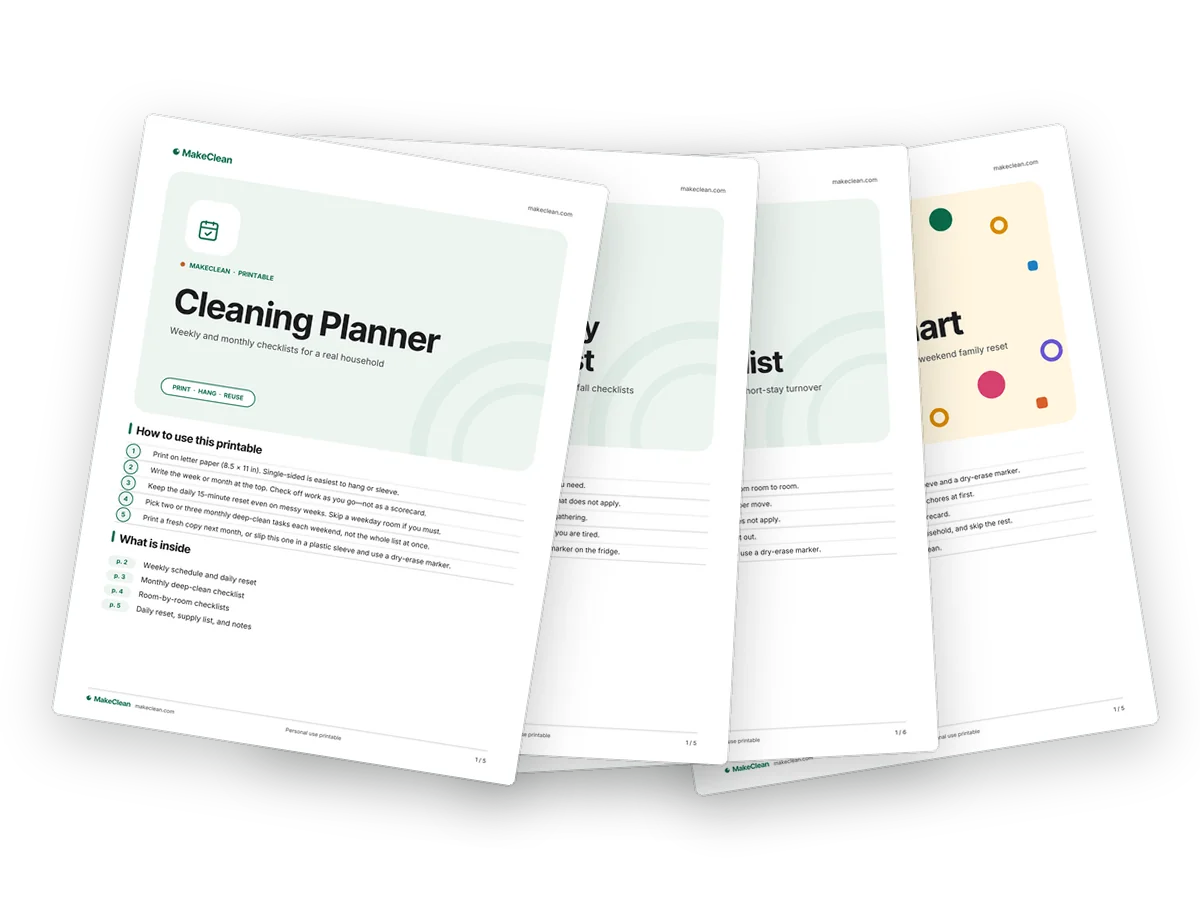
The Home Printables Bundle includes the planner, move-out checklist, kids' chore chart, and seasonal checklist — $16, save $8 versus buying them separately.
instant download
Launch offer: use code LAUNCH30 at checkout for 30% off the bundle, until November 30, 2026.
Buy now — $16 See all printables
Secure checkout by Payhip (card or PayPal)
Free: a 15-minute daily reset you can keep on messy weeks
Get the free two-page checklist (US Letter). The daily list plus a simple weekly glance — and a path to the full $7 planner if you want the rest of the system.