Kitchen
How to descale a coffee maker (vinegar or citric acid, used correctly)
If the coffee tastes bitter or flat, the machine is slower than it used to be, or you see white crust in the reservoir, you are looking at mineral scale. Descaling is a controlled acid rinse, then enough clean-water cycles that you cannot taste the cleaner. It is not the same as washing the carafe.
Some product links below go to Amazon and may become affiliate links. If you buy through an affiliate link we may earn a commission at no extra cost to you. See our affiliate disclosure.
Check the manual before you pick an acid
Many drip machines accept a white-vinegar solution. Some pod machines, espresso machines, and brands with a “descale” light prefer citric acid powder or their own descaling solution and specifically warn against vinegar, which can linger in gaskets or, in a few designs, affect sensors and aluminum parts. If the booklet or the maker’s site says “use our descaler only,” follow that. Voiding a warranty to save a few dollars of vinegar is not a good trade.
Citric acid is a strong, relatively low-odor option for mineral scale when the manufacturer allows a generic acid. Vinegar (about 5% acetic acid) is easy and cheap when it is allowed. Both need a thorough rinse.
How to descale a drip coffee maker
- Empty the basket and the carafe. Wash the carafe, lid, and basket with hot soapy water and rinse. That is ordinary cleaning; it does not descale the heating path.
- If vinegar is allowed, fill the reservoir with equal parts white distilled vinegar and water. For a heavy crust, some manuals allow a stronger mix; do not exceed what the maker permits. If you are using citric acid, dissolve it in warm water as the descaler or the manual directs (a common household starting point is one to two tablespoons in a reservoir of water—confirm before you invent a stronger mix).
- Start a brew cycle. Halfway through, some people pause the machine for 15–20 minutes so the solution can sit in the water path. If your machine cannot pause safely, just let the cycle finish and, for a scaled-up unit, run a second descale later rather than jury-rigging the hardware.
- Discard the hot solution in the carafe. Never leave it sitting in a thermal carafe to “work longer” if you will forget and brew coffee on top of it later.
- Rinse the reservoir, fill it with fresh water, and run at least two full clean-water brew cycles, more if you can still smell vinegar. Wash the carafe again.
Taste is the test If the next pot smells or tastes like vinegar or lemon, run another water-only cycle. A hurried rinse is the usual reason people swear they “can never use vinegar in the coffee maker again.”
Pod machines, kettles, and espresso
Pod brewers (including many Keurig-style machines) usually have a descale procedure: empty the reservoir, add the approved descaler, run the descale or hot-water cycles in the order the maker lists, then run several water-only rinses. Take the reservoir out and wash it; a film on the tank will re-seed scale. Remove and wash any drip tray and the pod holder, and clear the needle or exit spout only with the tool the maker recommends—not a moving drill bit.
Electric kettles often descale with a vinegar or citric-acid soak in the pot itself (do not immerse the base). Bring the solution to a boil or a hold, unplug, let it sit, discard, scrub remaining flakes with a non-scratch sponge, and boil clean water at least once and discard it.
Espresso machines vary widely. Use the brand’s descale product or a compatible citric formula, and backflush or rinse group heads as the manual says. If you are not sure, do not invent a vinegar flush through a machine that cost more than a week of coffee shop visits.
Oils versus scale (they need different cleaning)
Dark film on the carafe and basket is leftover coffee oil. It makes the next pot taste stale, and a descale will not remove it. Wash those parts with hot soapy water, or a carafe cleaner if the stain is baked on, and rinse well. White or chalky crust in the reservoir and a slow, noisy brew are scale. That is the acid job above. If you only descale, and never wash the carafe, the coffee can still taste off. If you only wash the carafe, the machine can still clog.
Reusable metal or mesh filters need a rinse after each pot and an occasional soak in the same mild descaling solution, then a thorough rinse, if they are crusted. Paper filters are discarded, but the basket they sit in still needs soap.
How often, and how to need it less
In hard water, a drip machine may need a descale every one to three months. In soft water, two to four times a year may be enough. Descale sooner if the brew slows, the machine sounds labored, or you see crust. Using filtered water (not necessarily softened-with-salt water, which can have its own issues in some machines) cuts how often you have to do this.
Wash the carafe and basket after each day of use so oils do not go rancid and masquerade as a “scale” flavor problem. That small habit belongs with the kitchen reset in the weekly cleaning schedule.
For why vinegar works on minerals and when it is the wrong cleaner, see natural cleaners that actually work. If you are already in a kitchen-maintenance mood, the dishwasher filter is the other small part that quietly ruins results when it is ignored.
Do not mix descalers Do not combine vinegar, commercial descaler, and bleach, and do not store a mystery leftover solution in the reservoir. Unplug the machine before you go fishing in the heating path with a tool.
Supplies
- White vinegar or citric acid (or the manufacturer’s descaler), depending on the machine
- A bottle brush for the carafe and reservoir corners
- Dish soap for the removable parts
- Fresh water for several rinse cycles
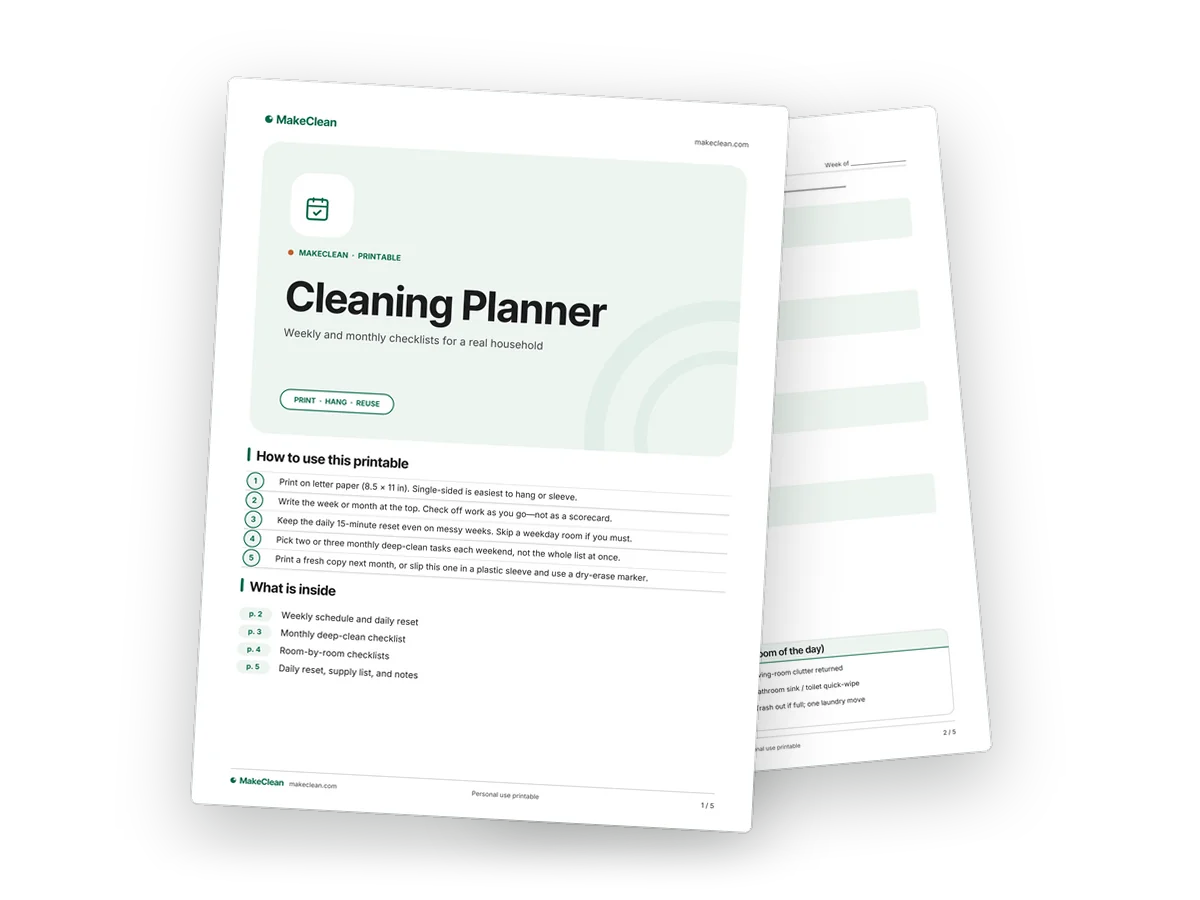
Put the schedule on the fridge
The MakeClean Cleaning Planner is a printable weekly and monthly checklist—same system as this site, ready to write on. Digital download, $7.
instant download
Launch offer: use code LAUNCH30 at checkout for 30% off the planner, until November 30, 2026.
Buy now — $7 See all printables
Secure checkout by Payhip (card or PayPal)
FAQ
How often should I descale a coffee maker?
Every one to three months in hard water, and at least a few times a year even in soft water. Do it sooner if the brew is slow, the machine is noisy, the coffee tastes off, or you can see white crust in the tank.
Can I use vinegar in a Keurig or other pod machine?
Only if the manufacturer says vinegar is acceptable. Many pod and espresso makers tell you to use their descaler or a citric-acid formula and warn that vinegar can leave a taste or affect parts. When the manual says no vinegar, believe it.
How many rinse cycles do I need after descaling?
At least two full reservoirs of clean water, and more if you can still smell or taste the acid. There is no prize for rinsing less. Wash the carafe and lid as well so you are not pouring a clean brew into a vinegar-scented pot.
Why does my coffee still taste bad after a descale?
Oily residue in the basket or carafe, a stale bag of coffee, a dirty reusable filter, or a rinse that was too short can all mimic a scale problem. Wash the removable parts with soap, run another water cycle, and only then descale again if the machine is still slow or crusty.
Is citric acid better than vinegar?
Citric acid is often stronger on mineral scale and smells less like a salad. Vinegar is easier to find and works in many basic drip machines. The better choice is the one your manufacturer allows, used at a sensible strength and rinsed thoroughly.
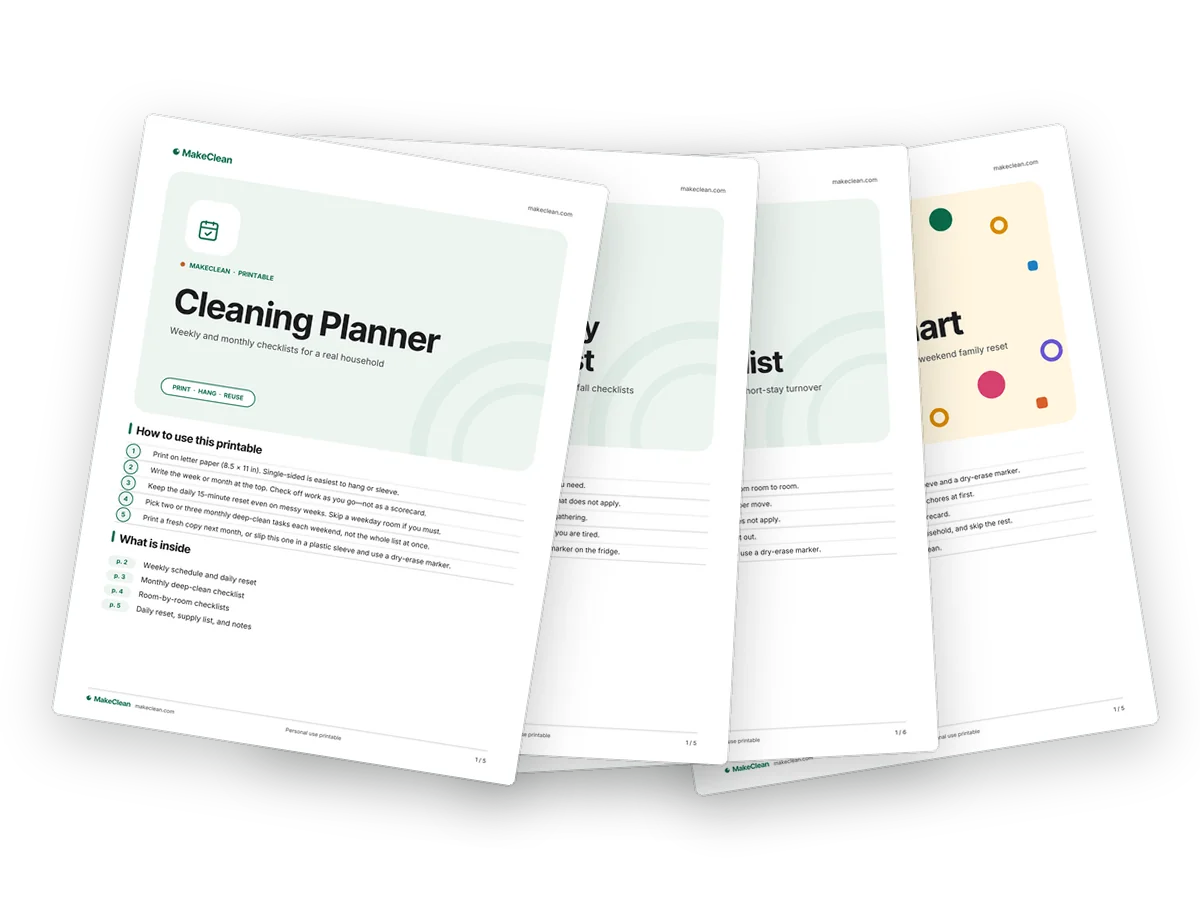
Get the checklists on paper
The Home Printables Bundle includes the planner, move-out checklist, kids' chore chart, and seasonal checklist — $16, save $8 versus buying them separately.
instant download
Launch offer: use code LAUNCH30 at checkout for 30% off the bundle, until November 30, 2026.
Buy now — $16 See all printables
Secure checkout by Payhip (card or PayPal)
Free: a 15-minute daily reset you can keep on messy weeks
Get the free two-page checklist (US Letter). The daily list plus a simple weekly glance — and a path to the full $7 planner if you want the rest of the system.